
Autonomous Navigation and AI Integration in Drone Inspection
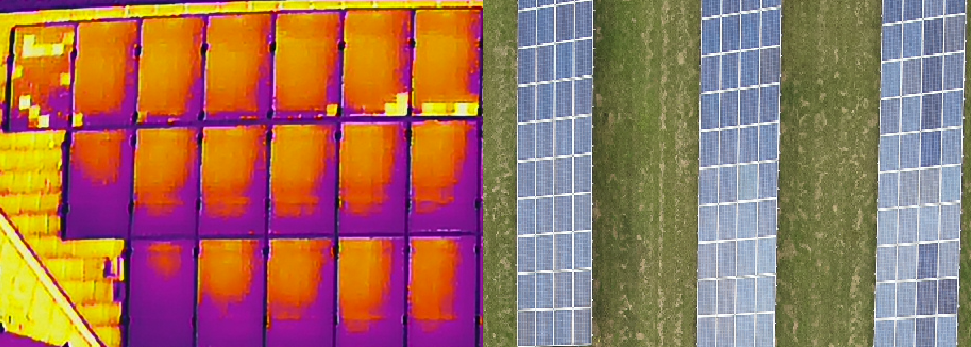 Autonomous Navigation and AI Integration: Revolutionizing Drone Inspections
In recent years, the integration of autonomous navigation and artificial intelligence (AI) in drones has revolutionised the inspection industry. The convergence of these technologies has enhanced the capabilities of drones, making them indispensable tools for infrastructure inspection, environmental monitoring, and industrial applications. This comprehensive overview delves into how these advancements are transforming the landscape of drone inspections, highlighting key technologies, applications, and future prospects.
1. Autonomous Navigation: Enhancing Efficiency and Accuracy
Autonomous navigation refers to the ability of drones to navigate and perform tasks without human intervention. This capability is primarily achieved through advanced sensors, GPS, and AI-driven algorithms. Autonomous drones can follow pre-defined flight paths, avoid obstacles, and make real-time decisions based on environmental conditions. This level of autonomy significantly enhances the efficiency and accuracy of drone inspections.
Key Technologies in Autonomous Navigation:
- GPS and GNSS: Global Positioning System (GPS) and Global Navigation Satellite System (GNSS) provide precise location data, enabling drones to navigate accurately.
- LIDAR and RADAR: Light Detection and Ranging (LIDAR) and Radio Detection and Ranging (RADAR) systems help drones detect and avoid obstacles.
- Computer Vision: AI-powered computer vision algorithms enable drones to recognize and interpret visual data, allowing for more sophisticated autonomous operations.
Applications in Drone Inspections:
- Infrastructure Inspection: Autonomous drones are widely used to inspect bridges, power lines, and pipelines. They can navigate complex structures, capture high-resolution images, and identify potential issues.
- Environmental Monitoring: Drones equipped with environmental sensors can autonomously monitor air and water quality, track wildlife, and assess vegetation health.
- Industrial Applications: In industries such as oil and gas, autonomous drones inspect facilities, detect leaks, and monitor equipment, reducing the need for human intervention and increasing safety.
2. AI Integration: Driving Innovation and Precision
AI integration in drones has driven significant innovation, enhancing their ability to perform complex tasks with precision. AI algorithms enable drones to analyze vast amounts of data, identify patterns, and make informed decisions. This capability is crucial for various inspection tasks, where precision and accuracy are paramount.
Key AI Technologies:
- Machine Learning: Machine learning algorithms allow drones to learn from data, improving their performance over time. For example, drones can be trained to recognize defects in infrastructure based on historical inspection data.
- Deep Learning: Deep learning models, particularly convolutional neural networks (CNNs), are used for image and video analysis. These models can detect anomalies, classify objects, and provide detailed insights.
- Natural Language Processing (NLP): NLP algorithms enable drones to understand and interpret human instructions, facilitating seamless human-drone interaction.
Applications in Drone Inspections:
- Defect Detection: AI-powered drones can automatically detect cracks, corrosion, and other defects in infrastructure. This capability significantly reduces inspection times and enhances accuracy.
- Predictive Maintenance: By analyzing historical data, AI algorithms can predict when equipment is likely to fail, allowing for proactive maintenance and reducing downtime.
- Real-Time Data Analysis: AI enables real-time data analysis, providing immediate insights and allowing for quick decision-making. This is particularly useful in emergency situations, such as natural disasters.
3. The Future of Autonomous Drones and AI Integration
The future of drone inspections lies in the continued advancement of autonomous navigation and AI integration. Several trends and developments are expected to shape this landscape:
- Enhanced Autonomy: Future drones will have even greater autonomy, capable of performing more complex tasks without human intervention. This includes advanced obstacle avoidance, dynamic flight path planning, and seamless integration with other technologies.
- Improved AI Algorithms: Ongoing research and development will lead to more sophisticated AI algorithms, enhancing the precision and accuracy of drone inspections. This includes advancements in machine learning, deep learning, and computer vision.
- Integration with IoT: The Internet of Things (IoT) will play a significant role in the future of drone inspections. Drones will be integrated with IoT networks, enabling seamless data exchange and real-time monitoring of infrastructure and environmental conditions.
- Regulatory Advancements: As drone technology evolves, so will the regulatory landscape. Governments and regulatory bodies are expected to develop more comprehensive frameworks to ensure the safe and ethical use of autonomous drones.
Conclusion
Autonomous navigation and AI integration are revolutionizing drone inspections, providing unprecedented levels of efficiency, accuracy, and safety. As these technologies continue to advance, they will unlock new possibilities and applications, transforming the inspection industry. By leveraging the power of autonomous drones and AI, industries can enhance their operations, reduce costs, and achieve greater levels of precision in their inspection tasks.
Sources:
- StartUs Insights (StartUs Insights)
- I’m Droning (I\’m Droning)
- DRONELIFE (DRONELIFE)


