The Role of Thermal Drones in Search and Rescue Operations
IronRed

Introduction

In recent years, thermal drones have emerged as invaluable tools in search and rescue (SAR) operations. Leveraging advanced thermal imaging technology, these drones provide unparalleled assistance across various public sector departments, significantly enhancing the capabilities of rescue organizations. This article explores the multifaceted applications of thermal drones in SAR missions, highlighting their impact and the broader benefits they offer.

  • Thermal drones
  • Search and rescue operations
  • Drone inspection
  • Public sector departments
  • Rescue organizations
  • Thermal imaging technology
  • UAV in SAR
  • Emergency response drones
  • Drone technology in SAR
  • Infrared drones

Enhancing Search and Rescue Operations with Thermal Drones

1. Public Safety and Emergency Services

Public safety departments, including police, fire, and emergency medical services, have integrated thermal drones into their SAR protocols. These drones provide critical aerial perspectives that are often inaccessible through traditional methods.

  • Police Departments: Thermal drones assist in locating missing persons, suspects, and evidence in challenging terrains and low-visibility conditions. The ability to detect body heat through dense foliage or during night-time operations drastically improves search efficiency.
  • Fire Departments: During fire incidents, thermal drones help identify hotspots, track the spread of fires, and locate trapped individuals. This information is crucial for firefighters to strategize their approach and ensure safety.
  • Emergency Medical Services: Thermal imaging aids paramedics in locating victims in remote or hazardous areas, facilitating quicker medical intervention.

2. Coast Guard and Maritime Rescue

For maritime SAR operations, thermal drones are indispensable. They can cover vast areas of the ocean, detect heat signatures of people in the water, and provide real-time data to rescue teams.

  • Detection and Monitoring: Drones can identify shipwrecks or stranded vessels and monitor the conditions of the sea, providing critical information to coordinate rescue efforts.
  • Night-time Operations: Thermal drones excel in night-time rescues, offering clear visibility despite darkness, which is often a limitation for manned helicopters and boats.

3. Disaster Response and Humanitarian Aid

Natural disasters such as earthquakes, floods, and hurricanes create scenarios where traditional SAR methods are often hindered by debris, water, or other obstacles. Thermal drones enhance the efficiency and effectiveness of these operations.

  • Earthquake Response: Drones equipped with thermal cameras can locate survivors trapped under rubble by detecting their body heat, significantly reducing search time.
  • Flood and Hurricane Relief: In flooded areas, thermal drones can identify survivors clinging to rooftops or stranded in isolated locations, ensuring timely rescue and aid distribution.

Advantages of Thermal Drones in SAR Operations

1. Rapid Deployment and Coverage

Thermal drones can be deployed quickly, covering large areas in a fraction of the time it would take ground teams. Their aerial vantage point and ability to navigate difficult terrains make them indispensable in urgent SAR missions.

2. Enhanced Visibility and Accuracy

Thermal imaging technology provides enhanced visibility in conditions where normal vision is impaired, such as smoke, fog, or darkness. This leads to higher accuracy in detecting and locating individuals, improving the chances of successful rescues.

3. Real-Time Data and Coordination

Drones offer real-time data transmission, allowing rescue teams to make informed decisions promptly. This real-time communication is vital for coordinating complex rescue operations involving multiple teams and resources.

4. Safety and Efficiency

Thermal drones minimize the risk to human rescuers by accessing hazardous areas that would otherwise be dangerous. This ensures that rescue efforts are conducted more safely and efficiently, preserving the wellbeing of SAR personnel.

Drone Inspection in General: Broad Applications

Beyond SAR operations, thermal drones are utilized in various drone inspection services, benefiting numerous industries.

  • Infrastructure Inspection: Drones inspect bridges, buildings, and other infrastructures for structural integrity, identifying cracks, thermal leaks, and other potential issues.
  • Energy Sector: In the energy sector, drones inspect power lines, wind turbines, and solar panels. They identify faults, thermal inconsistencies, and areas requiring maintenance.
  • Agriculture: Drones equipped with thermal cameras monitor crop health, detect irrigation issues, and assess field conditions, enhancing agricultural productivity.

Implementing Thermal Drone Technology in SAR

1. Training and Integration

For effective deployment, rescue organizations must train their personnel in drone operations and thermal imaging interpretation. Integrating drones into existing SAR protocols ensures a seamless transition and maximizes the technology’s benefits.

2. Collaboration with Technology Providers

Collaboration with drone technology providers is essential for staying updated with the latest advancements and ensuring the availability of state-of-the-art equipment. Continuous improvements in thermal imaging and UAV capabilities will further enhance SAR operations.

Future Prospects

The future of thermal drones in SAR operations looks promising with ongoing technological advancements. Innovations such as improved battery life, enhanced image resolution, and autonomous navigation will further augment the effectiveness of drones in rescue missions.

Conclusion

Thermal drones have revolutionized search and rescue operations, providing unmatched capabilities in locating and rescuing individuals in various challenging scenarios. Their integration across public sector departments and rescue organizations underscores their critical role in modern SAR missions. As drone technology continues to evolve, the potential for further enhancing emergency response and public safety remains immense.

References

  1. “Thermal Drones in Search and Rescue Operations,” Journal of Unmanned Vehicle Systems, 2023.
  2. “Advancements in Drone Technology for SAR,” International Journal of Emergency Services, 2022.
  3. “The Role of UAVs in Public Safety,” Public Safety Journal, 2021.
  4. “Thermal Imaging in Modern Rescue Missions,” Rescue and Safety Review, 2020.

The Rise of Drone Delivery Services and the Role of AI

Drone delivery services are revolutionizing logistics, offering a fast, efficient, and eco-friendly solution for various industries. Key players like Amazon Prime Air, UPS Flight Forward, and Alphabet’s Wing are leading the charge. This article explores the evolution of drone delivery services, highlighting the crucial role of artificial intelligence (AI) in planning, executing, and scheduling these deliveries.

Evolution of Drone Delivery Services

Amazon Prime Air has been a pioneer in the drone delivery sector. Since its inception, Prime Air has developed numerous drone prototypes, with the latest models incorporating advanced “sense-and-avoid” technology. This system enables drones to autonomously detect and navigate around obstacles, ensuring safe and reliable operations over greater distances without needing visual observers. Prime Air is operational in select U.S. areas and plans to expand into the UK and Italy by the end of 2024​ (US About Amazon)​​ (US About Amazon)​.

UPS Flight Forward focuses on medical deliveries, partnering with CVS Health to deliver prescription medicines. Their drones operate beyond the visual line of sight (BVLOS), crucial for scaling operations. UPS has also acquired eVTOL (electric vertical takeoff and landing) technology to enhance its drone fleet, highlighting its commitment to innovative and efficient delivery solutions​ (Built In)​.

Wing, a subsidiary of Alphabet, launched the first commercial drone delivery service in a major U.S. metropolitan area. Wing’s drones are designed to transport lightweight items like food, groceries, and pharmaceuticals over short distances, ideal for urban deliveries. The company continuously expands its operations, integrating more advanced drones for heavier payloads​ (Built In)​.

The Role of AI in Drone Deliveries

AI and Obstacle Detection: AI-driven computer vision technology is integral to “sense-and-avoid” systems used by companies like Amazon and Wing. These systems enable drones to autonomously detect and navigate around obstacles such as buildings, trees, and other aircraft, ensuring safe flight paths and delivery operations​ (CloudFactory Blog)​.

Route Optimization: AI algorithms optimize delivery routes based on various factors, including weather conditions, air traffic, and real-time data on obstacles. This optimization ensures efficient delivery paths, reducing travel time and energy consumption. For instance, Amazon’s Prime Air uses sophisticated algorithms to dynamically adjust flight paths to avoid collisions and ensure timely deliveries​ (US About Amazon)​​ (CloudFactory Blog)​.

Contingency Management: AI systems manage contingencies during delivery missions. In case of unexpected obstacles or adverse weather conditions, AI can reroute the drone to a safer path or execute emergency landings, minimizing risks to the drone and the delivery package​ (CloudFactory Blog)​.

Scheduling and Fleet Management: AI enhances delivery scheduling by predicting demand patterns and managing drone fleets accordingly. It balances the load across multiple drones, ensuring timely deliveries and efficient resource utilization. This capability is particularly beneficial for handling peak delivery times and large volumes of orders​ (CloudFactory Blog)​.

Real-World Applications and Future Prospects

Flytrex has successfully implemented drone deliveries for fast food and groceries in North Carolina and Texas, demonstrating the feasibility and convenience of this technology​ (Built In)​.

Looking ahead, AI and drone technology integration will continue to evolve, enabling more sophisticated and autonomous delivery systems. The future of drone deliveries will likely see expanded urban air mobility initiatives, dedicated air corridors for drones, and further advancements in AI to enhance safety, efficiency, and scalability​ (Dropoff)​​ (CloudFactory Blog)​.

Advantages and Challenges of Drone Delivery

Advantages:

  1. Speed: Drone deliveries significantly reduce delivery times, especially in densely populated areas, enhancing customer satisfaction by delivering goods rapidly​ (Dropoff)​.
  2. Cost Savings: With lower operational costs, reduced labor expenses, and improved fuel efficiency, drone delivery is highly cost-effective​ (Dropoff)​.
  3. Environmental Friendliness: Electric drones produce fewer emissions, aligning with eco-friendly delivery methods and contributing to sustainability​ (Dropoff)​.
  4. 24/7 Operation: Drones can operate around the clock, providing flexibility for deliveries at any time, even during peak demand hours​ (Dropoff)​.

Challenges:

  1. Regulatory Challenges: Drone delivery faces strict regulations and airspace restrictions that vary by region, requiring rigorous adherence to ensure safe and legal operations​ (Dropoff)​.
  2. Limited Payload Capacity: Drones are limited in the size and weight of packages they can carry, restricting their utility for larger or heavier deliveries​ (Dropoff)​.
  3. Weather Sensitivity: Adverse weather conditions, such as strong winds, heavy rain, or snow, can disrupt drone operations and affect delivery reliability​ (Dropoff)​.
  4. Security Concerns: Drones may be vulnerable to theft or interference, necessitating robust security measures to protect both the drone and its cargo​ (Dropoff)​.

In conclusion, drones powered by advanced AI systems are set to revolutionize the delivery industry. As companies continue to innovate and overcome regulatory and technical challenges, the vision of drones delivering packages swiftly and efficiently is becoming an increasingly tangible reality.

For more insights, explore sources such as Amazon’s Prime Air updates, CloudFactory’s guide on AI in drone deliveries, and MIT Technology Review’s reports on urban drone deliveries.


Logo

The Rise of Small and FPV Drones in Modern Warfare

Modern Warfare AI SystemsThe rise of small and first-person view (FPV) drones in modern warfare is fundamentally altering military strategies and battlefield dynamics. These drones, known for their cost-effectiveness, agility, and precision, are becoming indispensable tools in conflict zones, including the ongoing war in Ukraine. Their ability to evade sophisticated electronic warfare systems and perform various tactical missions makes them invaluable assets on the battlefield.

1. Cost-Effectiveness and Agility

Small drones, often referred to as micro or mini drones, are characterized by their compact size and lightweight design. This portability allows for rapid deployment and ease of transport, which is crucial in dynamic combat situations. These drones are significantly less expensive than larger military drones, making them accessible to a wider range of military units and even non-state actors.

  • Affordability: The low cost of small drones allows for mass deployment, enhancing operational capabilities without a substantial financial burden. For example, commercially available drones can be modified for military use at a fraction of the cost of traditional military drones​ (DRONELIFE)​​ (Council on Foreign Relations)​.
  • Agility: Small drones are highly maneuverable and can navigate through tight spaces and urban environments. Their agility allows them to perform complex aerial maneuvers, making them difficult targets for enemy defenses​ (DRONELIFE)​.

2. First-Person View (FPV) Technology

FPV drones provide operators with a real-time video feed from the drone’s perspective, offering a “first-person” experience. This capability is crucial for precision operations and complex missions, enhancing situational awareness and control.

  • Real-Time Video Feed: The live video feed enables operators to navigate and control the drone with high precision, which is essential for tasks like reconnaissance, target acquisition, and surveillance​ (DRONELIFE)​.
  • Enhanced Control: FPV technology allows for more precise handling of the drone, making it suitable for delicate operations such as bomb disposal and search and rescue missions​ (DRONELIFE)​​ (Council on Foreign Relations)​.

3. Tactical Advantages and Applications

The deployment of small and FPV drones offers several tactical advantages, making them game-changers in modern warfare. These drones enhance situational awareness, force multiplication, and reduce the risk to personnel.

  • Reconnaissance and Surveillance: Small drones are extensively used for reconnaissance and surveillance missions. They can provide real-time intelligence, monitor enemy movements, and gather critical data without exposing soldiers to danger​ (DRONELIFE)​​ (Council on Foreign Relations)​.
  • Precision Strikes: FPV drones are used for precision strikes on high-value targets. The real-time video feed enables operators to guide the drone accurately to the target, ensuring minimal collateral damage​ (DRONELIFE)​​ (Council on Foreign Relations)​.
  • Electronic Warfare: Small drones can carry electronic warfare payloads to jam enemy communications and disrupt their electronic systems. This capability is crucial for gaining a tactical advantage on the battlefield​ (DRONELIFE)​.

4. Case Study: The Ukraine Conflict

The ongoing conflict in Ukraine has highlighted the effectiveness of small and FPV drones in modern warfare. Ukrainian forces have leveraged these drones for various tactical missions, demonstrating their strategic value.

  • Adoption and Innovation: Ukrainian forces have adapted commercially available drones for military use, equipping them with makeshift explosives and other tactical payloads. These modifications have allowed for cost-effective and rapid deployment of drones on the battlefield​ (DRONELIFE)​​ (Council on Foreign Relations)​.
  • Operational Impact: Small drones have provided Ukrainian forces with enhanced situational awareness, enabling them to conduct reconnaissance, monitor enemy positions, and perform targeted strikes with high precision. Their ability to evade advanced Russian electronic warfare systems has been a significant advantage​ (DRONELIFE)​​ (Council on Foreign Relations)​.

5. Future Prospects and Challenges

The future of small and FPV drones in modern warfare is marked by ongoing technological advancements and evolving military strategies. However, several challenges need to be addressed to maximize their potential.

Technological Advancements: Ongoing research and development will lead to more advanced small and FPV drones with enhanced capabilities. This includes improvements in battery life, flight stability, and payload capacity.

Integration with AI: The integration of AI with small and FPV drones will enhance their autonomous capabilities, enabling more sophisticated operations and decision-making processes.

Regulatory and Ethical Considerations: As the use of small and FPV drones expands, there will be a need for robust regulatory frameworks to ensure their ethical and legal use in combat. Addressing concerns about accountability and compliance with international humanitarian law will be crucial.

Conclusion

The rise of small and FPV drones in modern warfare is reshaping military tactics and strategies. Their cost-effectiveness, agility, and precision make them invaluable assets on the battlefield, providing enhanced situational awareness and tactical advantages. As these technologies continue to evolve, they will play an increasingly critical role in modern military operations, transforming the future of warfare.

Sources:

Thermal image tracking drone
Night time search
Energy-Efficient Propulsion Systems for Industrial Drones

LogoEnergy-Efficient Propulsion Systems: Maximizing Performance in Industrial Drones
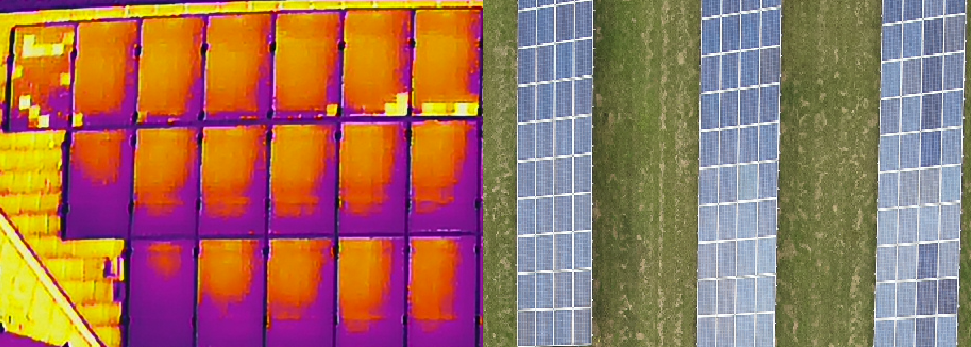
The demand for energy-efficient propulsion systems in industrial drones is driving innovation in the drone industry. These systems are crucial for extending flight times, reducing environmental impact, and enhancing overall drone performance. This comprehensive analysis explores the latest advancements in propulsion technologies, their applications in various industries, and the future prospects for sustainable drone operations.

1. Hybrid Propulsion Technologies: Balancing Efficiency and Performance

Hybrid propulsion technologies combine electric and combustion engines to optimize drone performance. These systems leverage the strengths of both power sources, providing greater flexibility and efficiency in drone operations.

Key Components of Hybrid Propulsion Systems:

  • Electric Engines: Electric engines offer low emissions and high efficiency, making them ideal for short flights and low-speed operations.
  • Combustion Engines: Combustion engines provide higher power output, enabling drones to achieve greater speeds and longer flight durations.

Advantages of Hybrid Propulsion:

  • Extended Flight Times: Hybrid systems can switch between electric and combustion power sources, allowing for longer flight durations compared to traditional single-engine drones.
  • Improved Energy Efficiency: By optimizing the use of power sources based on flight conditions, hybrid propulsion systems enhance energy efficiency, reducing operational costs.
  • Reduced Environmental Impact: The use of electric engines for part of the flight reduces emissions, making hybrid drones more environmentally friendly.

Applications in Industrial Drones:

  • Agriculture: Hybrid drones are used for precision agriculture, where they can cover large areas for crop monitoring, spraying, and planting with extended flight times.
  • Logistics: In the logistics sector, hybrid drones can deliver packages over long distances, combining the efficiency of electric engines with the power of combustion engines.
  • Infrastructure Inspection: Hybrid drones are employed for inspecting large infrastructure projects, such as pipelines and power lines, where extended flight times are essential.

2. Sustainable Energy Sources: Pioneering Eco-Friendly Drone Operations

The quest for sustainable energy sources is driving the development of eco-friendly propulsion systems for drones. These technologies aim to reduce the carbon footprint of drone operations while enhancing flight endurance and efficiency.

Key Sustainable Energy Technologies:

  • Solar Power: Solar-powered drones harness energy from the sun, enabling continuous flight during daylight hours. Solar panels integrated into the drone’s surface provide a renewable energy source, extending flight times and reducing reliance on traditional fuels.
  • Hydrogen Fuel Cells: Hydrogen fuel cells generate electricity through a chemical reaction between hydrogen and oxygen, producing water as a byproduct. These cells offer high energy density and long flight durations, making them suitable for various industrial applications.
  • Electric Propulsion: Advances in battery technology are driving the development of more efficient electric propulsion systems. High-capacity batteries and rapid charging technologies enable drones to achieve longer flight times and quicker turnaround times between missions.

Applications in Industrial Drones:

  • Environmental Monitoring: Solar-powered and hydrogen fuel cell drones are ideal for environmental monitoring tasks, such as tracking wildlife, assessing vegetation health, and monitoring air and water quality.
  • Urban Mobility: Electric propulsion systems are being explored for urban air mobility solutions, including passenger drones and air taxis. These systems offer a sustainable and efficient mode of transportation in urban environments.
  • Disaster Response: Sustainable energy drones are used in disaster response scenarios, where long flight times and rapid deployment are critical. These drones can assist in search and rescue operations, damage assessment, and delivering essential supplies.

3. The Future of Energy-Efficient Propulsion Systems

The future of drone propulsion systems lies in continued innovation and the adoption of sustainable technologies. Several trends and developments are expected to shape this landscape:

  • Advanced Battery Technologies: Ongoing research into high-capacity, fast-charging batteries will enhance the performance of electric drones, making them more viable for extended operations.
  • Hydrogen Infrastructure: The development of hydrogen production and refueling infrastructure will support the widespread adoption of hydrogen fuel cell drones, particularly in industrial and commercial sectors.
  • Solar Integration: Improvements in solar panel efficiency and integration will enable longer flight times and greater energy independence for solar-powered drones.
  • Regulatory Support: Government policies and incentives promoting sustainable energy solutions will drive the adoption of eco-friendly propulsion systems in the drone industry.

Conclusion

Energy-efficient propulsion systems are pivotal in maximizing the performance and sustainability of industrial drones. The advancements in hybrid propulsion, solar power, and hydrogen fuel cells are transforming the way drones operate, offering longer flight times, improved energy efficiency, and reduced environmental impact. As the drone industry continues to innovate, the adoption of sustainable propulsion technologies will play a crucial role in shaping the future of drone operations, driving efficiency, and promoting eco-friendly practices across various sectors.

Sources:

M30T

Autonomous Navigation and AI Integration in Drone Inspection

Autonomous Navigation and AI Integration: Revolutionizing Drone Inspections

In recent years, the integration of autonomous navigation and artificial intelligence (AI) in drones has revolutionised the inspection industry. The convergence of these technologies has enhanced the capabilities of drones, making them indispensable tools for infrastructure inspection, environmental monitoring, and industrial applications. This comprehensive overview delves into how these advancements are transforming the landscape of drone inspections, highlighting key technologies, applications, and future prospects.

1. Autonomous Navigation: Enhancing Efficiency and Accuracy

Autonomous navigation refers to the ability of drones to navigate and perform tasks without human intervention. This capability is primarily achieved through advanced sensors, GPS, and AI-driven algorithms. Autonomous drones can follow pre-defined flight paths, avoid obstacles, and make real-time decisions based on environmental conditions. This level of autonomy significantly enhances the efficiency and accuracy of drone inspections.

Key Technologies in Autonomous Navigation:

  • GPS and GNSS: Global Positioning System (GPS) and Global Navigation Satellite System (GNSS) provide precise location data, enabling drones to navigate accurately.
  • LIDAR and RADAR: Light Detection and Ranging (LIDAR) and Radio Detection and Ranging (RADAR) systems help drones detect and avoid obstacles.
  • Computer Vision: AI-powered computer vision algorithms enable drones to recognize and interpret visual data, allowing for more sophisticated autonomous operations.

Applications in Drone Inspections:

  • Infrastructure Inspection: Autonomous drones are widely used to inspect bridges, power lines, and pipelines. They can navigate complex structures, capture high-resolution images, and identify potential issues.
  • Environmental Monitoring: Drones equipped with environmental sensors can autonomously monitor air and water quality, track wildlife, and assess vegetation health.
  • Industrial Applications: In industries such as oil and gas, autonomous drones inspect facilities, detect leaks, and monitor equipment, reducing the need for human intervention and increasing safety.

2. AI Integration: Driving Innovation and Precision

AI integration in drones has driven significant innovation, enhancing their ability to perform complex tasks with precision. AI algorithms enable drones to analyze vast amounts of data, identify patterns, and make informed decisions. This capability is crucial for various inspection tasks, where precision and accuracy are paramount.

Key AI Technologies:

  • Machine Learning: Machine learning algorithms allow drones to learn from data, improving their performance over time. For example, drones can be trained to recognize defects in infrastructure based on historical inspection data.
  • Deep Learning: Deep learning models, particularly convolutional neural networks (CNNs), are used for image and video analysis. These models can detect anomalies, classify objects, and provide detailed insights.
  • Natural Language Processing (NLP): NLP algorithms enable drones to understand and interpret human instructions, facilitating seamless human-drone interaction.

Applications in Drone Inspections:

  • Defect Detection: AI-powered drones can automatically detect cracks, corrosion, and other defects in infrastructure. This capability significantly reduces inspection times and enhances accuracy.
  • Predictive Maintenance: By analyzing historical data, AI algorithms can predict when equipment is likely to fail, allowing for proactive maintenance and reducing downtime.
  • Real-Time Data Analysis: AI enables real-time data analysis, providing immediate insights and allowing for quick decision-making. This is particularly useful in emergency situations, such as natural disasters.

3. The Future of Autonomous Drones and AI Integration

The future of drone inspections lies in the continued advancement of autonomous navigation and AI integration. Several trends and developments are expected to shape this landscape:

  • Enhanced Autonomy: Future drones will have even greater autonomy, capable of performing more complex tasks without human intervention. This includes advanced obstacle avoidance, dynamic flight path planning, and seamless integration with other technologies.
  • Improved AI Algorithms: Ongoing research and development will lead to more sophisticated AI algorithms, enhancing the precision and accuracy of drone inspections. This includes advancements in machine learning, deep learning, and computer vision.
  • Integration with IoT: The Internet of Things (IoT) will play a significant role in the future of drone inspections. Drones will be integrated with IoT networks, enabling seamless data exchange and real-time monitoring of infrastructure and environmental conditions.
  • Regulatory Advancements: As drone technology evolves, so will the regulatory landscape. Governments and regulatory bodies are expected to develop more comprehensive frameworks to ensure the safe and ethical use of autonomous drones.

Conclusion

Autonomous navigation and AI integration are revolutionizing drone inspections, providing unprecedented levels of efficiency, accuracy, and safety. As these technologies continue to advance, they will unlock new possibilities and applications, transforming the inspection industry. By leveraging the power of autonomous drones and AI, industries can enhance their operations, reduce costs, and achieve greater levels of precision in their inspection tasks.

Sources:

Logo

Drones on a Budget: Revolutionizing the Future of Warfare!

Deployment of Search Drone The world of warfare is going through a significant transformation. The age-old strategies of tank warfare or dogfights in the skies are giving way to a new era of unmanned aerial vehicles (UAVs), or drones. But the real game-changer is not just the drones themselves, but their affordability. As the price tag of these flying machines drops, their accessibility surges, shaking the foundations of the traditional rules of engagement. Welcome to a future where drones on a budget are revolutionizing warfare!

Budget Skies: How Affordable Drones are Changing the Rules of Engagement!

As technological advancements continue to make drones smaller, faster, and cheaper to produce, they’re reshaping the military landscape in unprecedented ways. The affordability of drones means that almost every country, regardless of the size of its economy, can add these formidable machines to its arsenal. No longer are high-tech warfare capabilities the exclusive domain of superpower nations with deep pockets.

Moreover, affordability goes hand in hand with deployability. Having a fleet of budget-friendly drones allows military forces to launch multiple UAVs simultaneously, increasing their overall impact and effectiveness. Additionally, these drones can perform a variety of tasks, from intelligence gathering to targeted strikes, making them a versatile tool in modern warfare. The combination of cost-effectiveness and functional versatility is fundamentally flipping the script on conventional military strategy and tactics.

Warfare Reimagined: A Look at the Impact of Cost-Effective Drone Technology!

The incredible affordability of drone technology is not just changing the way warfare is conducted, but also how it’s imagined and strategized. The inexpensive nature of drones allows military forces to use them more liberally and experimentally, leading to innovative tactics and techniques. Affordable drones offer an unprecedented opportunity for military strategists to think outside the box, enabling surprising maneuvers and unconventional strategies.

Furthermore, the cost-effectiveness of drones is democratizing access to high-tech warfare. Smaller nations with limited defense budgets can now compete on a more equal footing with larger, better-funded nations. This shift in the balance of power is redefining geo-political dynamics, as underdogs find themselves on a level playing field with traditionally dominant players. In short, affordable drones are reshuffling the deck of global power dynamics, creating a new, more equitable era of warfare.

In conclusion, drones on a budget are indeed revolutionizing the future of warfare. Whether it’s reshaping traditional military tactics or democratizing the playing field of global power dynamics, affordable drone technology is undoubtedly a game-changer. While the affordability of drones presents its own set of challenges, the opportunities it offers are too significant to ignore. As we move forward in this new era, the drone-filled skies might just become the new norm, heralding a future where the power to wage warfare is not just about the size of your pocket, but the breadth of your imagination.

Police using drone to monitor area

From Sci-Fi to Sky-High: AI’s Exciting Journey in Drone Tech!

===
Once confined to the realm of science fiction, drones have made a grand entrance into our reality, propelled by rapid advancements in artificial intelligence (AI). As AI technologies evolve, they continue to revolutionize the drone industry, opening up new opportunities for innovation and transforming the way we perceive the future of flight. Buckle up for an exciting voyage as we explore the exhilarating journey of AI from sci-fi to sky-high in the world of drone technology!

Soaring Through History: AI’s Ascendance in Drone Tech

AI’s journey to the summit of drone technology hasn’t been a sudden flight. It has been a gradual climb, fuelled by continuous advancements in machine learning and computational prowess, which have acted as wind beneath its wings. In the early days, drones were merely remote-controlled devices used for military and surveillance purposes. However, as AI began to flex its muscles, it equipped these high-flying gadgets with the ability to analyze data, recognize patterns, and make decisions, thereby giving birth to autonomous drones.

The integration of AI in drone tech has enabled us to unlock the true potential of these airborne marvels. These smart devices can now navigate through complex terrains, adjust their flight path in real-time, and even carry out tasks such as delivering packages or assisting in rescue operations. This has been possible due to the advent of sophisticated AI algorithms and sensors that allow drones to perceive their environment better and make intelligent decisions.

AI’s role in drone technology has transcended beyond mere functionality to infuse a sense of intuition and intelligence in these machines. From recognizing objects and faces to understanding complex commands, AI-powered drones are continually pushing the boundaries of what’s possible, leaving us in awe of their capabilities.

Futuristic Flying: The Sci-Fi to Sky-High Transformation of AI Drones

The metamorphosis of drones from sci-fi fantasies to sky-high realities has been nothing short of spectacular. In early science fiction, drones were often depicted as sentient beings with a mind of their own. Today, AI has brought us a step closer to that vision by enabling drones to not just fly, but to think, learn, and adapt.

Just as the T-800 in Terminator learned to understand human emotions, modern AI drones are becoming adept at recognizing and reacting to their surroundings. They can analyze weather conditions to optimize their flight path, survey large areas for anomalies, and even identify individuals in a crowd. This level of sophistication was once the stuff of sci-fi, but AI has turned it into a reality, redefining our expectations of drone technology.

The future of AI drones seems brighter than ever, inviting us to a world where drones will not just be tools but intelligent companions. With AI, drones are set to become personal assistants, emergency responders, delivery agents, and much more. As we look forward to a sky dotted with these ingenious devices, it’s clear that the union of AI and drone technology is a match made in the sky-high heavens.

===
As we stand on the threshold of a new era, the journey of AI in drone tech from sci-fi to sky-high serves as a testament to the wonders of technological innovation. The convergence of AI and drone technology has catapulted us into an exciting future where the sky is not the limit, but a playground for AI-powered drones. As we continue to explore the uncharted territories of this thrilling realm, one thing is certain – with AI at the helm, the future of drone technology is nothing short of extraordinary!

Logo

The Evolution of AI in Drone Technology: Key Developments and Applications


AI Analysis

The integration of artificial intelligence (AI) with drone technology has revolutionised numerous industries over the past few years. This technological synergy has enhanced drone capabilities, enabling more sophisticated, autonomous operations that extend beyond simple remote control. Here’s an overview of the recent developments and the impactful applications of AI-powered drones.

Key Developments in AI-Powered Drones

  1. Enhanced Autonomy and Real-Time Data Processing AI algorithms have significantly improved the autonomy of drones. These drones can now navigate complex environments, make real-time decisions, and process data instantly. This is crucial for applications such as search and rescue operations, where rapid decision-making can save lives.
  2. Advanced Sensors and Payloads Modern AI drones are equipped with advanced sensors and high-resolution cameras. For instance, the AIDrone unveiled at CES 2024 features a 64MP EO/IR camera capable of detecting minute cracks and temperature variations, making it ideal for infrastructure inspections and public safety tasks.
  3. Machine Learning and Computer Vision The integration of machine learning and computer vision has enabled drones to interpret and respond to their surroundings more effectively. This includes applications like monitoring large areas for security purposes, analysing crop health in agriculture, and conducting detailed inspections of industrial equipment.

Applications Across Industries

  1. Agriculture AI-powered drones have transformed precision farming. They can monitor crop health, detect diseases, and optimise irrigation by analysing multispectral imagery. This results in higher crop yields and reduced resource wastage.
  2. Construction and Urban Planning In construction, drones equipped with AI can survey sites and monitor projects efficiently. Urban planners utilise drones for detailed aerial views, aiding in sustainable development and infrastructure management.
  3. Security and Surveillance AI drones play a pivotal role in security by monitoring large areas and identifying potential threats. They are used by law enforcement for enhanced situational awareness, tracking individuals or vehicles in real-time, and providing critical data for decision-making.
  4. Environmental Monitoring Environmental scientists employ AI drones to monitor ecosystems, track wildlife, and assess the impact of climate change. These drones collect and analyse environmental data, helping in conservation efforts and informing policy decisions.
  5. Logistics and Delivery Companies like Amazon and UPS are exploring AI drones for last-mile delivery. These drones navigate urban landscapes, optimising routes to deliver packages efficiently and cost-effectively.
  6. Disaster Management In disaster-stricken areas, AI drones assess damage, locate survivors, and provide real-time updates to first responders. Thermal imaging and machine learning enhance their ability to detect heat signatures and increase the chances of finding survivors.

Future Prospects and Challenges

The future of AI-powered drones is promising, with continuous advancements in AI algorithms and hardware. However, challenges such as privacy concerns, regulatory hurdles, and the need for robust cybersecurity measures remain. Governments worldwide are working to establish frameworks to ensure safe and responsible drone use while fostering innovation.

In conclusion, the integration of AI in drone technology has opened new frontiers in various fields, demonstrating the immense potential of this technology. As AI continues to evolve, we can expect even more sophisticated and beneficial applications of drones in the near future.

References

  1. Blue Falcon Aerial – The Future of Drones: Top Trends to Watch in 2024 https://www.bluefalconaerial.com
  2. Sentrycs – The 2024 Forecast in Drone Technology & Drone Security https://www.sentrycs.com
  3. DroneZon – Latest Drone News, Uses, Research And Innovation https://www.dronezon.com
  4. Vision Platform – AI and Drones: Advancements and Applications in Unmanned Aerial Vehicles https://www.visionplatform.ai
  5. Unmanned Systems Technology – AIDrone Unveiled at CES 2024 https://www.unmannedsystemstechnology.com
  6. Built In – AI Drones: How AI Works in Drones & 13 Examples https://www.builtin.com
  7. OpenMind – AI and Drones https://www.bbvaopenmind.com

Hovering DJI M30T

Flying High: The Tug of War in Drone Production!

Welcome to the thrilling world of drones! It’s a fast-paced, high-flying industry that’s rapidly changing the world as we know it. Drones have taken flight in the common conscience, from being mere sci-fi fantasies to becoming the go-to tech for aerial imagery, surveillance, and even delivery services! So, tighten your seatbelts as we dive into the high-stakes arena of drone manufacturing, where innovation soars, and the competition is fierce.

Soaring Ambitions: The Sky’s Not the Limit in Drone Manufacturing!

As we hurtle towards the future faster than a supersonic drone, the ambitions in drone production are reaching dizzying heights. It’s a tech race amongst the brightest minds and the boldest companies, where the finish line keeps moving higher and higher into the stratosphere. As drones continue to evolve, manufacturers are constantly pushing boundaries, developing drones that are faster, more efficient, more versatile, and packed with advanced features.

Drone manufacturers are not content with the status quo. They are consistently searching for ways to reinvent the drone experience, to push the limits of what’s possible. Current advancements include increased battery life for longer flight times, improved camera technology for crystal-clear aerial footage, and sophisticated autonomous navigation systems. The objective is simple: to make drones more useful, more reliable, and even more fun to fly!

The Air Up There: Aerial Ascendancy in the Drone Production Battlefield!

The drone production battlefield is buzzing with activity. Companies are not just in a race to outdo each other in terms of drone capabilities but also to gain aerial ascendancy. This struggle for market dominance makes the drone manufacturing sector one of the most high-profile industries in the world. After all, the higher the drone goes, the higher the stakes get!

In this cutthroat competition, manufacturers are constantly innovating, experimenting, and iterating on their designs to emerge as the top dog in the drone world. The result is a diverse range of drones, from lightweight pocket-sized drones for the casual hobbyist to heavy-duty, professional-grade drones for industrial applications. The sheer variety of drones in the market is a testament to the intense competition and the relentless pursuit of excellence in the drone manufacturing industry.

The world of drone manufacturing is a high-stakes game played in the sky. It’s a constant tug of war between companies, as they vie to ascend the throne of drone supremacy. But in this sky-high competition, it’s the consumers who are the real winners. As drones continue to evolve and improve, we all get to experience the thrill of this fantastic technology. So keep your eyes on the skies, because the best is yet to come in the world of drones! It’s truly a great time to be alive and flying high!

Fly High, Spy High: Data Security Dance With Drones!

In the realm of technology, a new dance is taking flight – a dazzling waltz where drones pirouette through the cyber sky, manipulating data security like a master choreographer. This fascinating ballet between technology and security is not just a spectacle, but also a crucial step in defining the future of digital security. Let’s dive into this captivating performance, where the sky is the dance floor, and the dancers are the drones.

“Dancing Skyward: The Tango of Drones and Data Security!”

In the grand ballroom of technology, drones, with their unprecedented agility and versatility, are the tango dancers – full of passion, precision, and power. Like the seductive rhythm of the tango, drones have become an alluring part of today’s digital landscape. They capture our imaginations with their grace and finesse, soaring high above the mundane limits of terrestrial technology. But beneath the spectacle, there’s a drama unfolding. As the drones move, they generate and process a torrent of data. The challenge is keeping this data secure, as the intimacy of the tango dance mirrors the vulnerability of data in the cyber realm.

As data security has evolved, it has begun to mirror the intricate and intimate aspects of the dance. The dance partners here are the data encryption and the countermeasures against cyber attacks. The key lies in the rhythm, the synchronicity. As drones collect and transmit data, security measures need to be in sync, ensuring that the dance continues uninterrupted, unhacked.

“Spying High, Breaching Skies: The Ballet of Drones in Cybersecurity!”

Moving from the passionate tango to the classic ballet, drones take the center stage once again. In this act, they are not just dancers, but also spies. The ballet of drones in cybersecurity involves a delicate, poised balance between surveillance and protection. Just as a ballet dancer spins and leaps with poise and precision, drones too, in their quest for data, navigate the digital landscape with uncanny accuracy.

But the true marvel comes when the dance takes a dramatic turn. As drones pirouette in the air, they can also be used to detect and neutralize threats. By incorporating advanced cybersecurity measures into their choreography, these aerial ballerinas can become protectors of the digital realm. As they leap and twirl, they can simultaneously scan for security breaches and counteract them, turning the cyber ballet into a dance of defense.

So, in the grand ballroom of technology, the ballet of drones and data security continues to mesmerize and amaze us. It’s more than just a dance; it’s a symbol of the evolving relationship between technology and security. As the drones continue to fly high and spy high, they’ll continue to play a pivotal role in shaping the future of data security. The dance has just begun, and we can only wait with bated breath to see what new steps will be introduced in this ever-evolving choreography of drones and cybersecurity. In this dance, every pirouette counts, every leap matters, for in the skyward dance of drones, we see the future of our digital world!

ro_RO